
Forest Schools & Outdoor Learning
Den building, campfires and bushcraft — learning that happens in wellies.
Find forest school near you
Tap a pin to open a place, hit expand for the full-screen map, or jump straight to what’s closest to you.
We sort by distance and don’t store your location. Or enter a postcode →
Popular areas
Loading the map…
4 places
Forest school by area
4 towns across 4 counties.
Forest Schools and Outdoor Learning Sessions with Young Children
A guide to forest school and outdoor learning days out for parents of under-fives, and what our four listed sites suggest about cost, length and what's waiting for you at the gate.
What it actually is
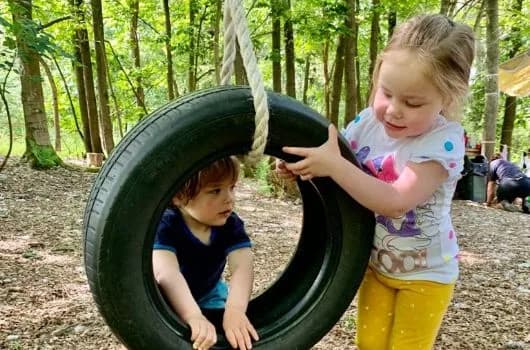
A forest school session is a booked block of time in a wood, a field or a smallholding, led by someone who knows the site, in which children do things with their hands and get muddy doing them. Fire circles, den building, whittling with supervision, digging for worms, carrying buckets of water further than is strictly necessary. It is not a playground and it is not a nature reserve you wander round on your own — the adult running it is the point, because they know which log to turn over.
The age split matters more here than at almost any other kind of day out. A two-year-old at forest school is engaged in sensory work: bark, mud, the noise a stick makes on a tree. They will not build a den, and nobody expects them to. A five-year-old starts following instructions and finishing things. An eight- or ten-year-old wants tools, fire and a job with a real outcome, and will be visibly unimpressed by a session pitched at their little brother.
Our catalogue reflects that skew. Of the four forest school and outdoor learning sites listed here, three suit toddlers aged one to three and three suit preschoolers, with two noted as workable with babies. Only one is flagged for five- to eight-year-olds, one for eight- to twelves, and one for teenagers. If your child is at primary school, read the individual listing closely rather than assuming the category fits — most of what we list in this slice is aimed squarely at the pre-school end.
What to expect on the day
Budget roughly two hours. The median recorded visit length across the three sites where we have a figure is 120 minutes, which is about the natural span of a led session before small children run out of steam. It is rarely a full day out on its own, so plan something either side or accept an early lunch at home.
On cost, this is one of the cheaper categories we cover. Half of the four sit in our moderate band, one is cheap, and one is free — the free and cheap ones tend to be community-run or council-supported rather than commercial. Booking is usually necessary because group sizes are capped by the ratio of adults to children.
Facilities are thin by design, and that is worth saying plainly. Parking is confirmed at two of the four. A picnic area is confirmed at one; buggy-friendly access at one; dogs welcome at one; birthday parties at one; relaxed or SEN-friendly sessions at one. Where we haven't confirmed something it means nobody has checked it, not that it isn't there — but with woodland sites the safe assumption is that you bring your own everything. Water, snacks, spare socks, a full change of clothes, and wellies rather than trainers.
Three of the four are outdoor only. One works in both indoor and outdoor space, which is the one to look for if you are nervous about weather with a baby. Otherwise, sessions run in the rain, and the good ones treat rain as an asset.
Where it goes wrong
This is the wrong choice if you need somewhere to shelter, somewhere to change a nappy indoors, or a café to retreat to. It is the wrong choice on a day when your child is already tired, because the fun is physical and self-directed and a tired three-year-old will simply sit down in the mud and object. And it is the wrong choice if you were hoping to sit down yourself — forest school expects the accompanying adult to be present and, often, involved.
It is also worth being honest that the label covers a wide range. Some of these are structured teaching sessions; others are working farms or gardens where the outdoor learning is a strand of what happens rather than the whole offer.
Places we list
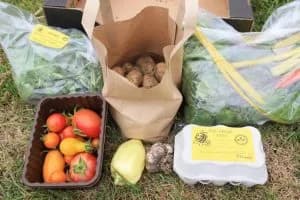
- Bosavern Community Farm, St Just, Cornwall — a working community farm at the far end of the county, where the learning comes wrapped in actual animal husbandry.
- Little Squirrels Forest School, Leatherhead, Surrey — a straightforward led forest school in the commuter belt, of the kind that fills fast in term time.
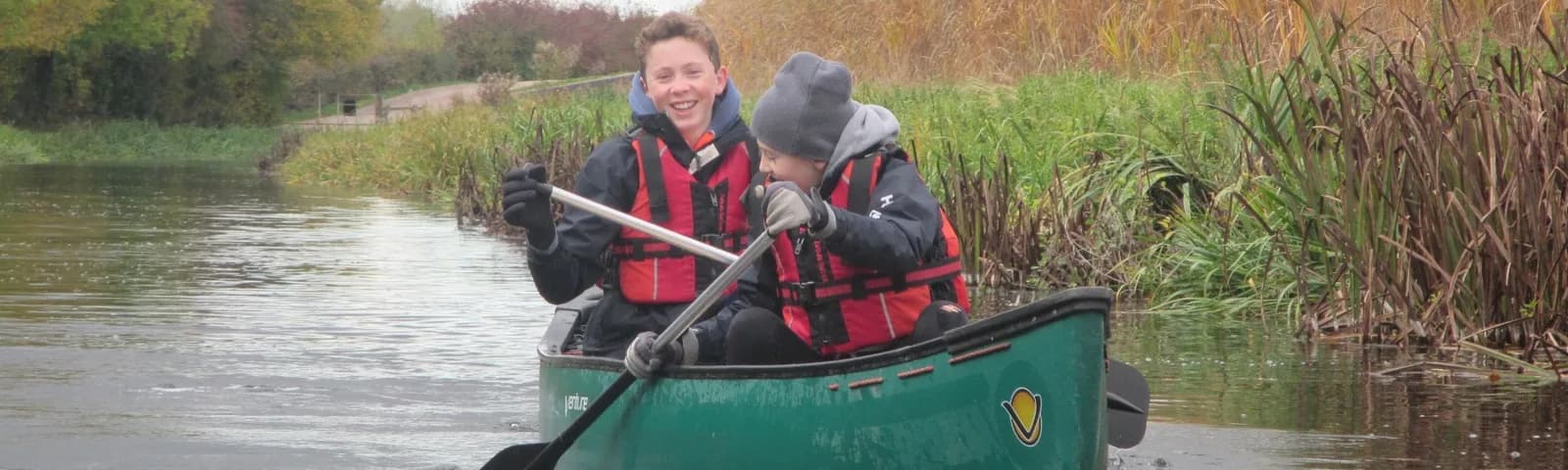
- Somerset Adventures, Taunton — outdoor activity with a broader age reach than most in this group.
- The Giant's Garden, North Chailey, East Sussex — a garden-based outdoor site, and a gentler introduction than a wood if your child is very small.